

Table of Contents
- How to Tell If Coffee Beans Are Fresh by Smell and Taste
- Signs of Stale Coffee Beans to Watch For
- How to Tell If Coffee Beans Are Fresh Without a Roast Date and Choosing Your Next Bag
- Frequently Asked Questions
Last Updated: November 21, 2026
How to Tell If Coffee Beans Are Fresh by Smell and Taste
Fresh coffee beans are easy to read once you know what to check. A fresh bag should smell vivid, sweet and layered.
Open the bag and breathe in slowly. Fresh beans release a bright, rich aroma with clear fruit, chocolate or caramel notes, lively, not muted.
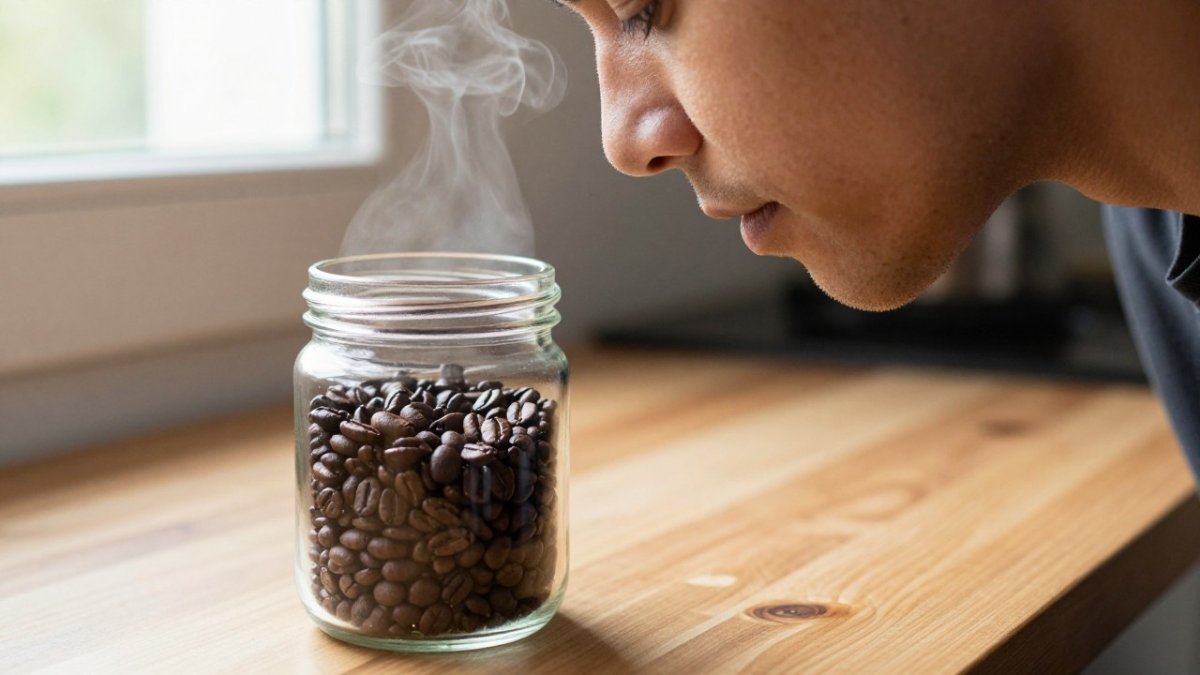
Next, check the taste of a brewed cup:
Fresh beans taste sweet, balanced and full of flavor, with a clean finish and distinct notes.
Watch out: a bitter or ashy cup does not always mean stale beans. Over-extraction or too fine a grind can cause it too, so change one variable at a time.
Signs of Stale Coffee Beans to Watch For
Stale beans give themselves away through smell and taste. The aroma fades, and the cup tastes flat, dull or papery. A specialty coffee freshness guide describes this kind of flat cup as a common sign that beans have lost their freshness.
- A weak or faded smell when you open the bag
- A flat, hollow or cardboard-like taste in the cup
- Beans that look dull or grayish instead of rich brown
Surface oil is another clue, but it is not a reliable one. A America's Test Kitchen guide to coffee freshness notes that dark-roast beans often look shinier than light-roast beans, even when both are fresh. Judge freshness by aroma and taste first, and use appearance only as a supporting clue.
Stale beans show up in both smell and taste, and a few other signs can support the judgment.
| Sign | Where you notice it | Reliability |
|---|---|---|
| Weak or faded smell | When you open the bag | Main check |
| Flat, hollow or cardboard taste | In the brewed cup | Main check |
| Dull or grayish beans | Visual inspection | Supporting clue only |
| Surface oil | Visual inspection | Not reliable; dark roasts look shinier when fresh |
How to Tell If Coffee Beans Are Fresh Without a Roast Date and Choosing Your Next Bag
Many bags do not list a roast date, so use your nose, eyes and cup together. If the aroma is strong and the cup tastes sweet, the beans are likely fresh.
Try French Roast for a dependable dark roast, Breakfast Blend for an everyday cup, or the Single Origin Favorites Sample Pack to compare origins.
To decide how often to buy, subscription coffee cost and freshness lays out whether regular delivery keeps your coffee fresher.
Two Brew Brothers Coffee roasts every order the same day it is placed, giving you a fresh baseline for these checks.
Ready to taste the difference? Shop Two Brew Brothers Coffee's freshly roasted beans and find the flavor that suits you best.
Frequently Asked Questions
How long do coffee beans last?
Coffee beans are at their best for roughly two to four weeks after roasting, with a peak window that is commonly cited at roughly five to 21 days after roasting. Beans stay drinkable longer than that but lose aroma and sweetness gradually. Whole beans hold their flavor better than ground coffee, which goes stale much faster once exposed to air. Store beans in an airtight, opaque container away from heat and light, and buy in quantities you can finish within a few weeks of the roast date.
Can you tell if coffee beans are fresh by looking at them?
Appearance is a weak indicator on its own. Oily or shiny beans are often assumed to be fresh, but roast level strongly affects surface oil: dark-roast beans look shinier than light-roast beans, . Look for even color and a dry, matte to lightly glossy surface, then confirm with aroma and a brew test rather than relying on looks alone.
Do fresh coffee beans bloom when brewed?
Fresh coffee releases carbon dioxide when hot water hits the grounds, which causes the bloom: a foamy rise on the surface during the first 30 to 45 seconds. A strong bloom suggests the beans have degassed less and are relatively fresh. A weak or absent bloom can mean stale beans, though it can also result from grind size or water temperature, so treat it as one clue among several.
